
Completion of
Foundation_Core module
Basic understanding of
sensors and electronic components
Laptop or desktop
computer for programming and testing
Arduino IDE installed
on the system
Completion of the
Arduino Programming Basics course
In this experiment,
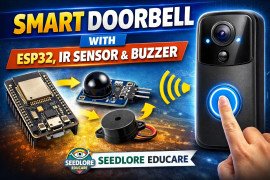
students will design and build a wired smart doorbell system using an
ESP32 microcontroller and an IR sensor. The IR sensor is used to detect the
presence of a visitor near the door. When a visitor is detected, the ESP32
processes the sensor input and activates a buzzer to provide an audible alert.
The system is powered
and programmed through a USB cable connected to a computer, without using Wi-Fi
or internet connectivity. Visitor detection status can be observed through the
serial monitor, helping students understand real-time sensor readings and
program flow.
This project
introduces students to basic electronics, sensor interfacing, embedded
programming, and automation concepts, forming a strong foundation before
moving on to advanced IoT-based applications.
After completing this course, students will be able to:

NCERT Certified in Robotics &AI
Smart Doorbell